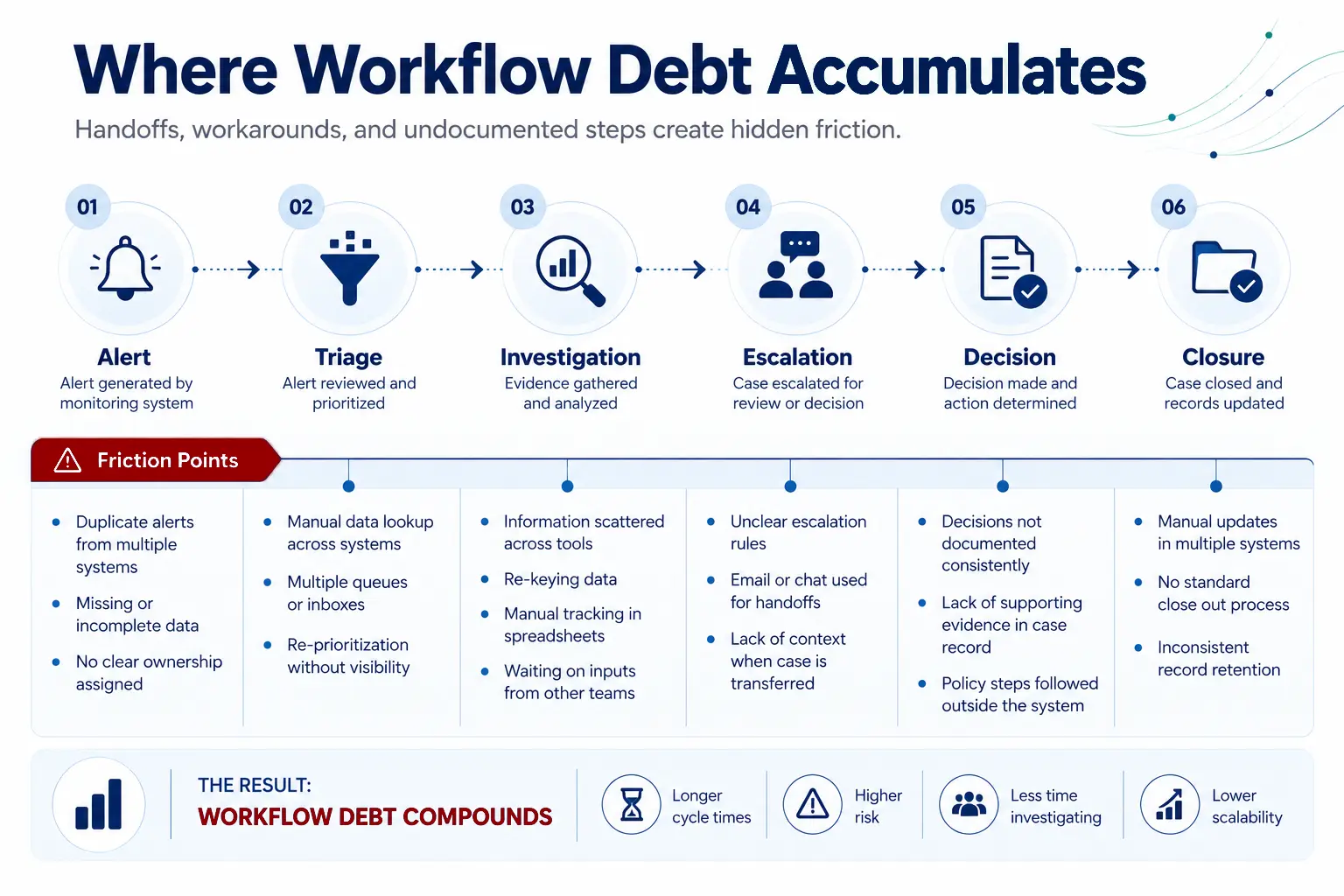
One obvious cost of workflow debt is inefficiency. Perhaps the more important cost may be what it does to the teams doing the work. Fraud investigation requires judgment. Investigators need time to connect evidence, recognize patterns, understand customer behavior, assess risk, and make defensible decisions. That is where their expertise creates value.
But when the workflow around them is fragmented, a significant part of the day can disappear into administrative work: gathering information, pivoting between systems, updating records, following up with other teams, and figuring out where a case needs to go next. If that overhead becomes part of the daily routine, it changes how investigators spend their time and, ultimately, the value they can bring to the investigation.
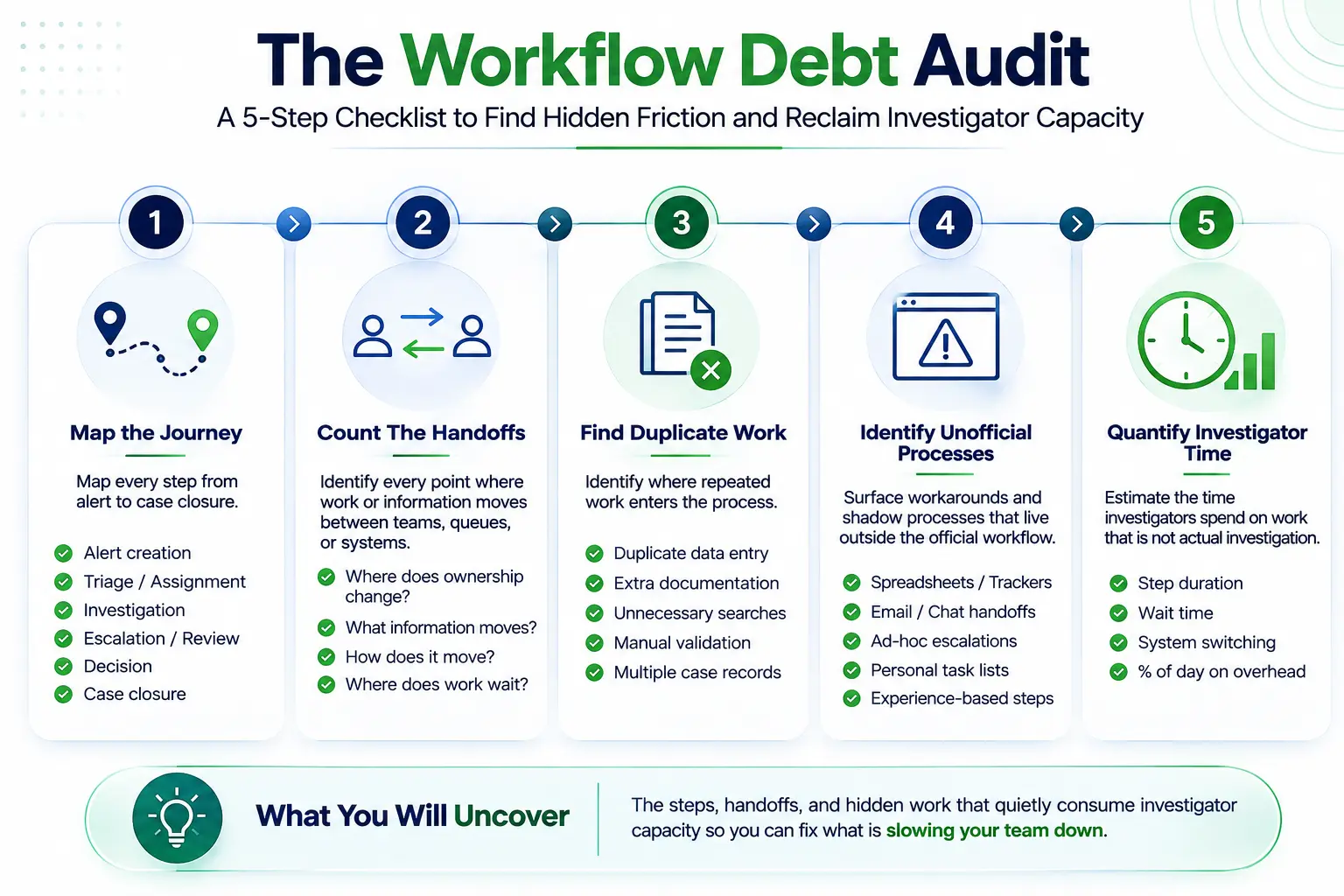
That is why workflow debt is not simply an efficiency issue but a capacity and talent issue. The traditional way to measure a fraud team is through case throughput: how many cases an investigator closes. But case volume does not tell the whole story. A better measure is how much of an investigator’s day is actually spent investigating versus navigating the workflow around it.