Key Takeaways

Fraud teams dedicate significant time managing financial risk. They monitor losses, strengthen controls, investigate suspicious activity, and track whether cases are resolved within required timelines. However, there is often another risk building inside many fraud operations that is not being evaluated enough, and it is created by how the work actually gets done.
Engineering teams have a name for this: technical debt. It is the accumulated cost of taking shortcuts today that makes systems harder and more expensive to maintain tomorrow. It is tracked, discussed, and eventually paid down over time, but can be largely avoided.
Fraud operations can realize a similar kind of debt when manual workarounds, disconnected systems, duplicate investigations, and undocumented decisions become part of the daily process.

What is Fraud Workflow Debt?

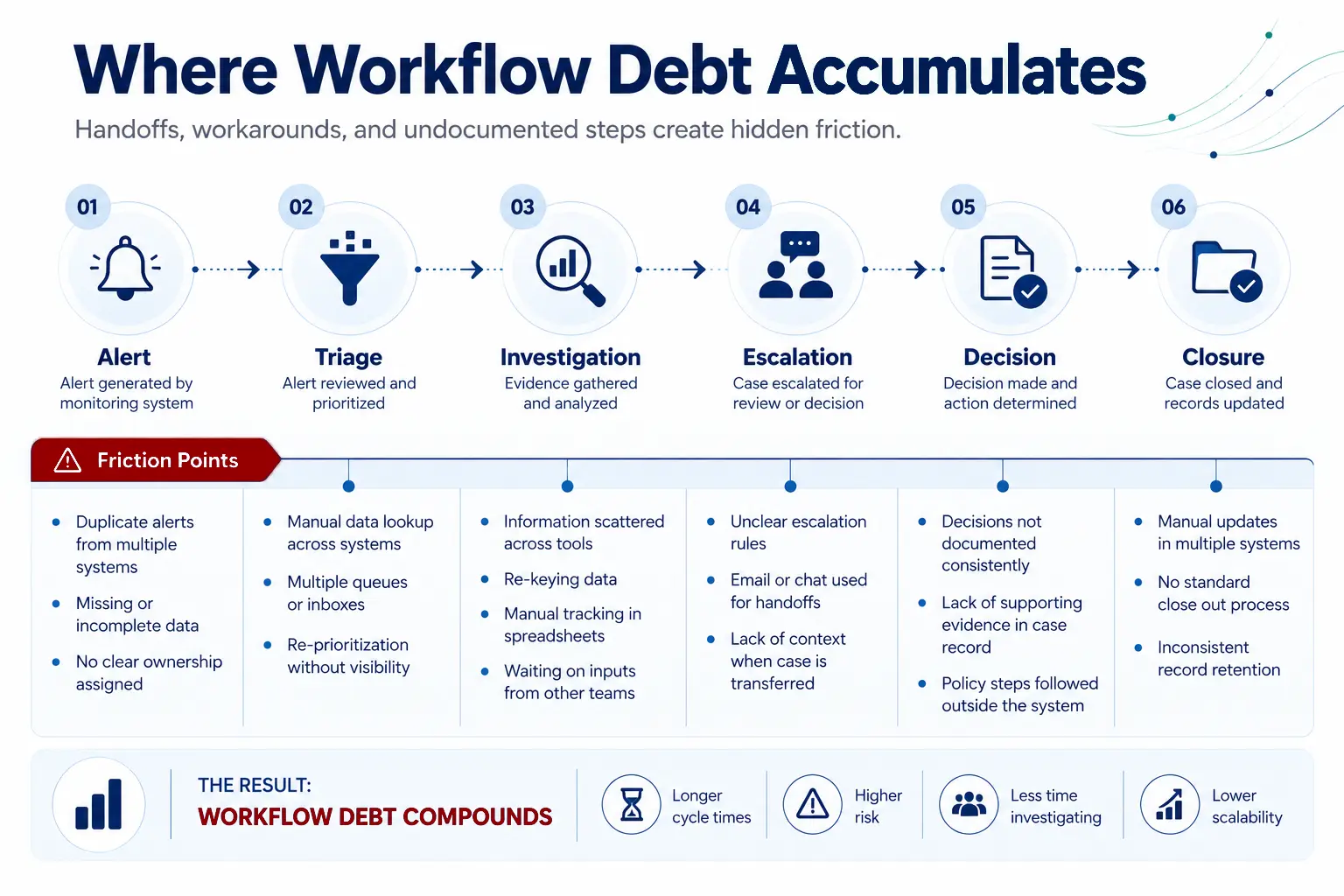
Workflow debt is the accumulation of operational friction across the fraud investigation lifecycle. It can start innocently. A team creates a spreadsheet because two systems are disconnected or investigators send emails to get information from another department. It could be due to an escalation trigger that follows an informal path because there is no defined workflow for it. These choices do not look wrong in the moment, but the workflow that results from all of them stacked together becomes unavoidably risk-prone.
The problem becomes especially visible when investigators have to pull information from multiple systems, replicate work that another team has already completed, or manually document decisions that could have been captured as part of the workflow. That is workflow debt in action: the time that should be spent investigating is being absorbed by everything around the investigation.
Blog Where workflow debt accumulates

Why Does it Stay Invisible?

Workflow debt does not announce itself. There is no outage, failed controls, or a single moment that flags it as a problem. It simply adds a little friction to every case until something changes the math.
A fraud spike, a new typology, or a regulatory examination can expose how much the institution has been relying on workarounds. Suddenly, the extra handoffs and disconnected processes that were merely inconvenient become a backlog, longer investigation times, and greater pressure on already stretched teams. The fraud spike did not create the workflow debt. It simply made the debt impossible to ignore.
A useful way to understand the impact of workflow debt is to consider how the operation would respond to a sustained increase in alert volume. Would investigators be able to absorb the additional work within existing processes, or would higher volumes expose more handoffs, manual steps, and competing demands? Because adding investigators to a fragmented workflow does not just add capacity but also scales the same overhead.

Investigator Capacity is the Real Casualty

One obvious cost of workflow debt is inefficiency. Perhaps the more important cost may be what it does to the teams doing the work. Fraud investigation requires judgment. Investigators need time to connect evidence, recognize patterns, understand customer behavior, assess risk, and make defensible decisions. That is where their expertise creates value.
But when the workflow around them is fragmented, a significant part of the day can disappear into administrative work: gathering information, pivoting between systems, updating records, following up with other teams, and figuring out where a case needs to go next. If that overhead becomes part of the daily routine, it changes how investigators spend their time and, ultimately, the value they can bring to the investigation.
That is why workflow debt is not simply an efficiency issue but a capacity and talent issue. The traditional way to measure a fraud team is through case throughput: how many cases an investigator closes. But case volume does not tell the whole story. A better measure is how much of an investigator’s day is actually spent investigating versus navigating the workflow around it.
Audit the Hidden Debt

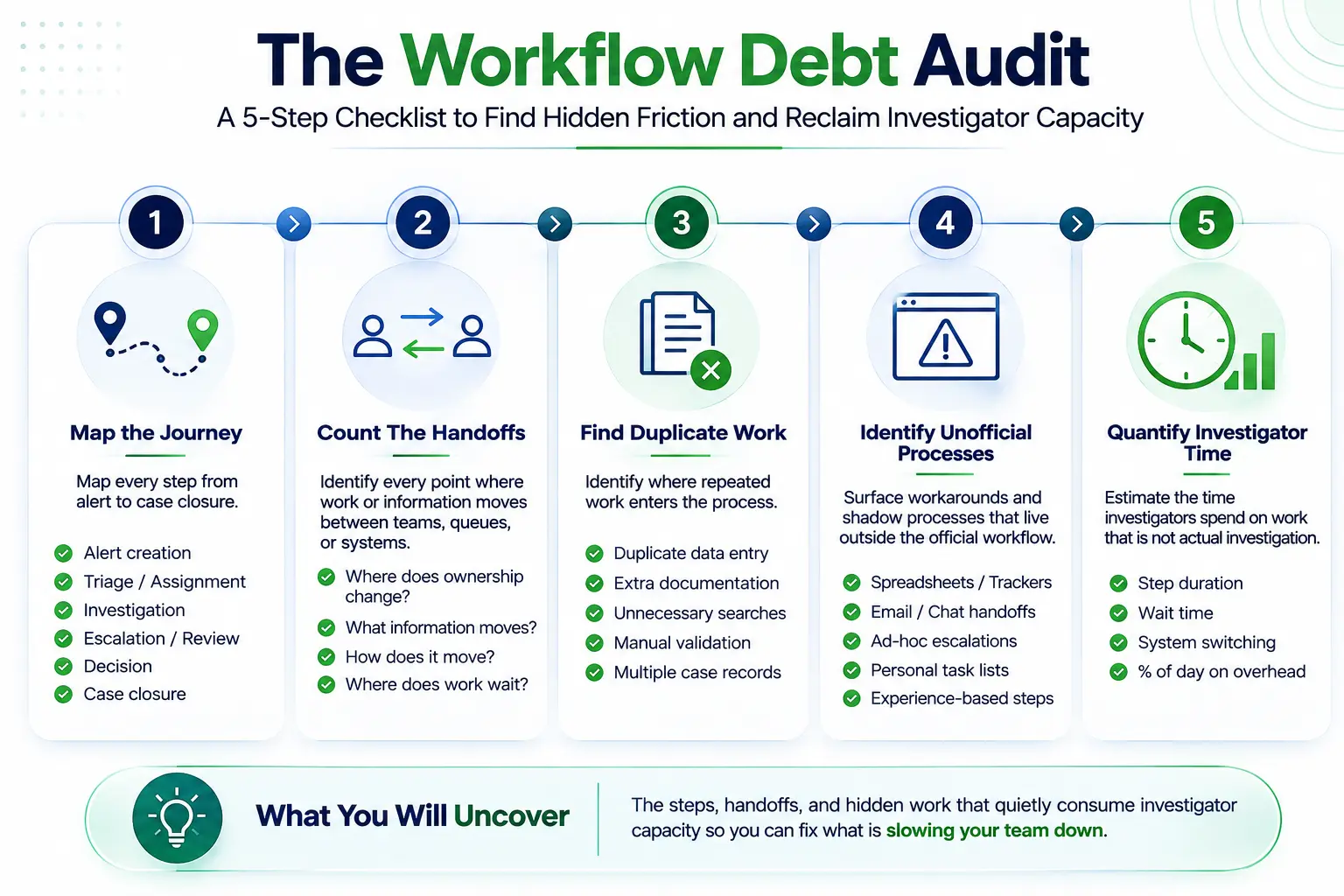
Workflow debt does not require a complicated assessment to be identified. Start with one real case that recently moved through your institution and trace it from alert to closure. At every handoff, ask who officially owns that step, how many systems the information passed through, whether anything was manually re-entered, and whether the decision could be understood by someone who was not part of the original investigation.
The answers tend to be revealing on their own. Every step that falls between teams or systems is a potential source of workflow debt. The goal is not to eliminate every handoff or automate every decision. It is to understand where investigators are spending time moving work forward rather than investigating.

Consolidation is a Prerequisite, Not an Upgrade

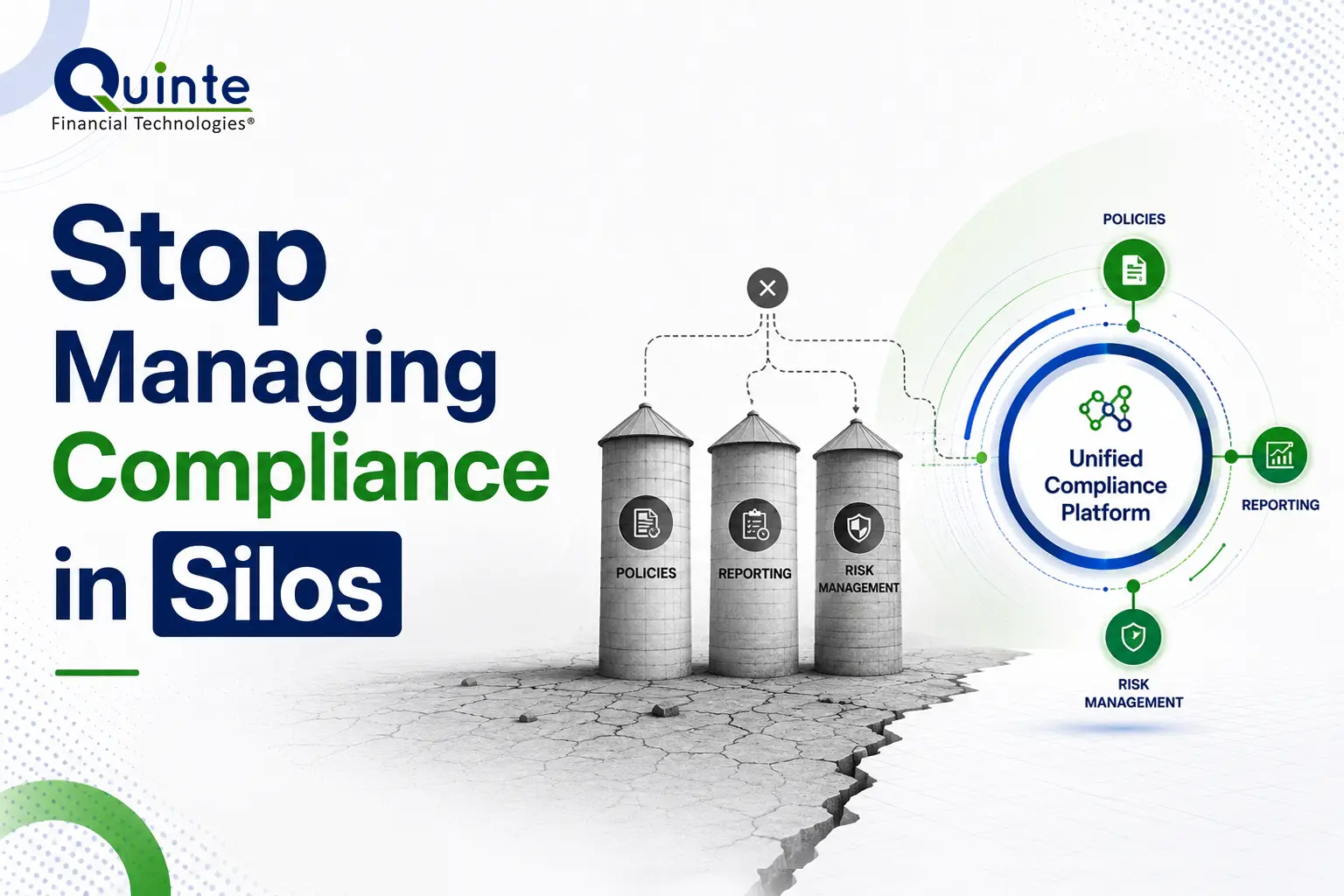
Once the debt is visible, the next step is not simply to add another tool. In many cases, more technology can add another layer of complexity to an already fragmented environment. The real need is an operational foundation that brings the investigation together: the case, the people responsible for it, the workflow it follows, the evidence supporting it, the decisions made along the way, and the controls that govern execution. Consolidating case management across the enterprise reduces the fragmentation that creates many of these workarounds in the first place.
AI works better when the workflow around it is structured. Consistent case information, defined processes, and accessible investigation history give automation and AI better context to work with. A fragmented workflow can limit the value of even sophisticated technology. The same foundation supports examiner readiness. Centralized documentation, clear ownership, and complete decision histories make it easier to understand how an investigation progressed and why a decision was made. And as fraud volumes and complexity grow, standardized workflows give institutions a way to scale without simply adding more people to an increasingly complicated process.

Close the Debt with CaseHUB

CaseHUB helps financial institutions build that foundation through AI-enabled enterprise case management. Rather than adding another tool to an already fragmented stack, it orchestrates the workflow with one policy-controlled system: alerts become cases automatically, ownership and SLAs are visible in real time, and the regulatory timelines that used to live in someone’s memory are built directly into the workflow. Link analysis surfaces organized fraud patterns a single case view would miss, and the same audit trail an investigator relies on day-to-day is what an examiner sees when asking how a decision was made. None of that replaces investigative judgment. It just means investigators spend their time exercising it, rather than reconstructing where a case stands, which is the same distinction the audit above is designed to surface.