

September 8, 2026
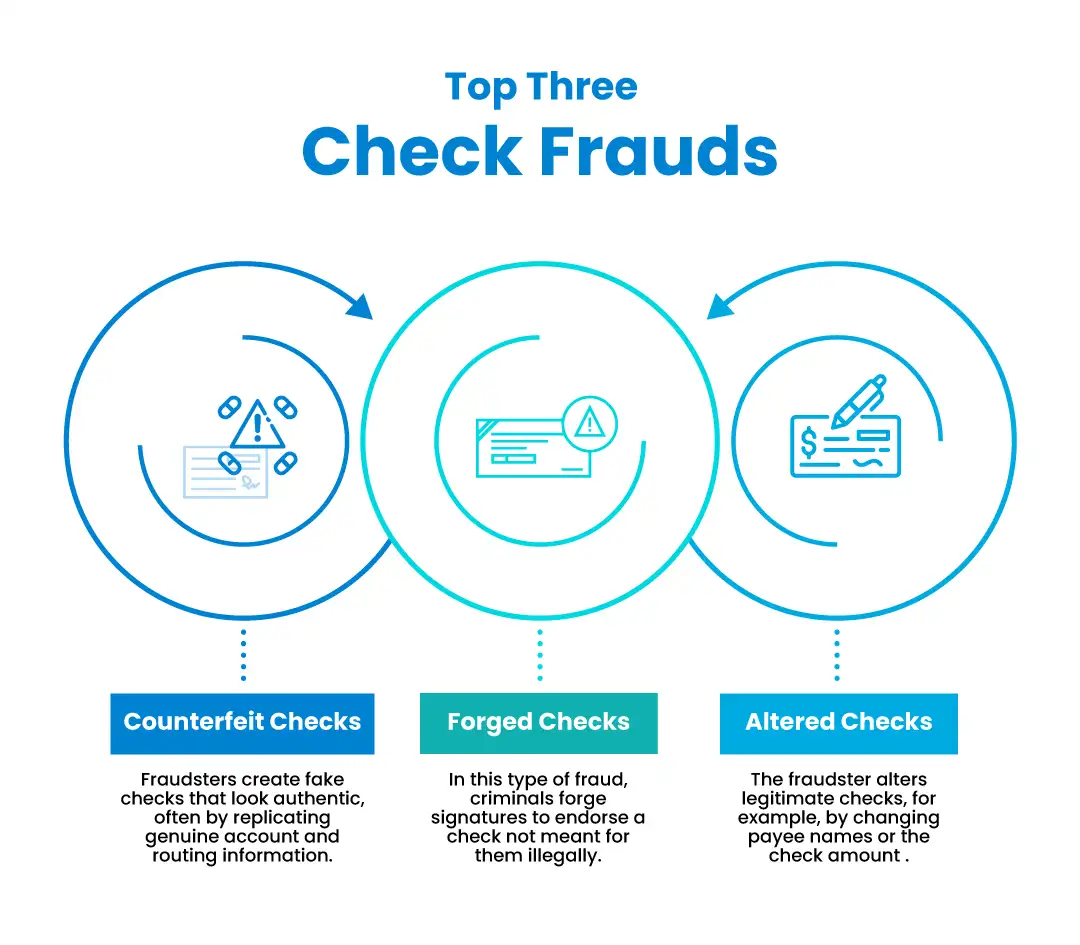
In the modern digital banking landscape, it is essential for financial institutions (FIs) to adopt effective strategies to protect against the evolving threat of check fraud. As fraud techniques become more sophisticate, ranging from counterfeit checks to altered payee names; detecting these illicit activities can be increasingly challenging. Fortunately, by harnessing advanced technologies like Artificial Intelligence (AI), FIs can proactively streamline their check fraud detection processes. This approach not only enhances security but also significantly mitigates associated risks, ultimately fostering a safer banking environment for both financial institutions and their customers/members.
The above findings clearly demonstrate that check fraud poses a serious and escalating threat to both financial institutions and their customers/members in the United States. This alarming trend persists even as the overall use of checks declines. It is imperative for stakeholders to acknowledge this risk and take action to protect themselves.
This is where Artificial Intelligence (AI)—specifically Generative AI (GenAI) and Agentic AI can make a significant difference by providing advanced solutions to modern challenges like:
One of the key challenges in detecting check fraud is dealing with poor-quality or distorted check images, which fraudsters may manipulate to hide their alterations.
Check fraud often involves mismatched or inconsistent data—such as names, amounts, or dates that need to be cross-checked across internal and external systems.
Synthetic identities are created by combining real and fake data to appear legitimate, which is also a threat to check fraud.
Check fraud also involves certain anomalies in typical customer/member behavior, which are too subtle to be noticed.
Real-time detection of check fraud might be challenging due to the need to process large volumes of checks quickly. Fraudsters might alter the checks technically, making it challenging to detect fraud immediately.
AI-driven fraud detection systems can inadvertently develop biases due to training data, resulting in false positives or missed fraud. Additionally, many AI models operate as “black boxes,” making it difficult to interpret or explain their decision-making processes, which raises concerns about fairness and trust.
Fraudsters constantly refine their check fraud tactics to create increasingly convincing counterfeit checks. It is imperative for fraud detection systems to evolve simultaneously with innovative fraud tactics to protect the FIs against future losses.
Sharing check fraud data across FIs can mitigate the risk of financial losses but raises significant privacy and security concerns. Balancing fraud prevention by avoiding privacy breaches of customer/member personal details requires advanced technical solutions.
– by Sharad Gupta
Vice President, Automation & AI